


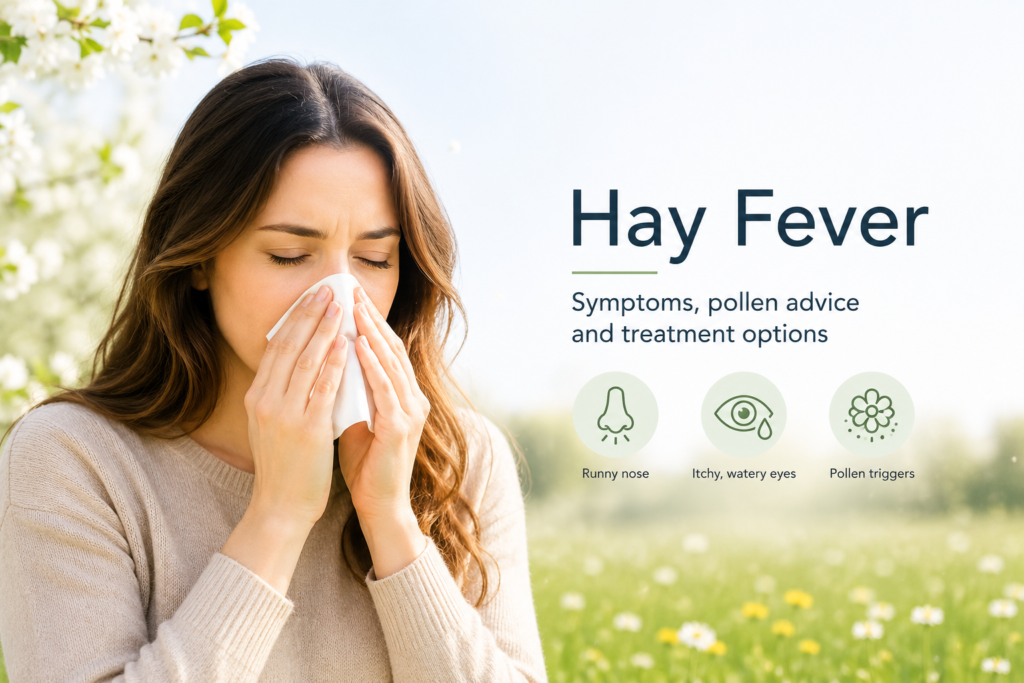
Seasonal allergies, commonly known as hay fever, can make certain times of the year uncomfortable. Frequent sneezing, a runny nose, itchy eyes and nasal congestion can interfere with sleep, work and everyday activities. For some people, symptoms appear mainly during spring and summer. Others experience allergy symptoms throughout the year because of indoor triggers such as dust mites, mould or pet allergens.
Understanding what causes seasonal allergies can help you recognise common triggers and take practical steps to manage exposure. Although hay fever has no permanent cure, suitable treatment and everyday precautions can help control symptoms.
What Are Seasonal Allergies?
Seasonal allergies occur when the immune system reacts to substances in the environment that are usually harmless. These substances are called allergens. Pollen from trees, grasses and weeds is one of the most common causes of seasonal allergic reactions.
Hay fever is a type of allergic rhinitis. It affects the lining of the nose and may also cause symptoms in the eyes, throat and mouth. When someone with a pollen allergy breathes in pollen, their immune system releases chemicals such as histamine. This reaction can lead to sneezing, itching and nasal inflammation.
Unlike a common cold, hay fever is not caused by a virus. It is an allergic response, and symptoms may continue for as long as a person remains exposed to the triggering allergen.
Common Symptoms of Seasonal Allergies
Seasonal allergy symptoms can range from mild irritation to problems that affect daily routines. They often begin shortly after exposure to pollen.
Common symptoms include:
- Repeated sneezing
- Runny or blocked nose
- Itchy nose and throat
- Red, itchy or watery eyes
- Coughing
- Itchy ears or the roof of the mouth
- Reduced sense of smell
- Headache or pressure around the forehead
- Tiredness and disturbed sleep
Some people experience several symptoms together. For example, nasal congestion may make it difficult to sleep comfortably, while itchy eyes can affect reading, driving and computer work.
However, these symptoms are not exclusive to allergies. A cold and other conditions can cause similar problems. If symptoms are persistent or unusual, a healthcare professional can help identify the cause.
What Causes Seasonal Allergies?
Pollen is the main trigger of hay fever. Plants release tiny pollen particles into the air during their reproductive cycles. Wind can carry these particles over considerable distances, allowing them to enter the nose and eyes.
Different plants release pollen at different times of the year. The exact season varies according to the local climate and vegetation.
1. Tree Pollen
Trees such as birch, oak and alder can release pollen during the earlier part of the year. In many parts of Europe, tree pollen is an important springtime allergy trigger.
2. Grass Pollen
Grass pollen is a common cause of hay fever. Symptoms may become more noticeable during late spring and summer, particularly when grass is flowering and pollen levels rise.
3. Weed Pollen
Certain weeds release pollen during late summer and autumn. Depending on the region, plants such as ragweed can cause symptoms during this period.
4. Indoor Allergens
Not every allergy is seasonal. Dust mites, mould spores and pet dander can trigger allergic rhinitis throughout the year. Some people experience both seasonal and indoor allergies.
Seasonal Allergies vs Common Cold
Hay fever and the common cold can cause similar symptoms. However, a few differences may help you understand what could be happening.
| Feature | Seasonal Allergies | Common Cold |
|---|---|---|
| Main cause | Allergens such as pollen | Viral infection |
| Sneezing | Often frequent | Common |
| Itchy eyes or nose | Common | Less typical |
| Fever | Not usually present | Sometimes present |
| Duration | Can continue during allergen exposure | Usually improves within 1–2 weeks |
| Seasonal pattern | Often linked to pollen seasons | Can occur throughout the year |
These differences are general clues rather than a way to diagnose yourself. If you are unsure, seek advice from a healthcare professional.
How to Prevent or Reduce Seasonal Allergy Symptoms
You may not be able to avoid pollen completely. Nevertheless, a few everyday habits can reduce contact with allergens and make allergy season easier to manage.
1. Check Local Pollen Forecasts
Follow local pollen forecasts, especially during spring and summer. On days with high pollen levels, consider limiting time outdoors when practical.
2. Keep Windows Closed When Pollen Is High
Keeping windows and doors closed during periods of high pollen can help reduce the amount entering your home. You can ventilate your rooms when outdoor pollen levels are lower.
3. Shower and Change Clothes After Going Outside
Pollen can collect on your hair, skin and clothing. Therefore, showering and changing clothes after spending time outdoors can help remove pollen before it spreads around your home.
4. Wear Sunglasses Outdoors
Wraparound sunglasses can help reduce pollen contact with your eyes. This may be particularly useful if you experience itching, redness or watery eyes.
5. Clean Your Home Regularly
Use a damp cloth to remove dust from surfaces instead of dry dusting. Regular vacuuming with a suitable HEPA-filter vacuum can also help manage indoor allergens.
6. Avoid Drying Clothes Outdoors
Clothes and bedding can collect pollen when left outside to dry. During high-pollen periods, drying laundry indoors may help reduce exposure.
7. Avoid Rubbing Your Eyes
Rubbing itchy eyes can increase irritation. Instead, ask a pharmacist about suitable options if eye symptoms are bothering you.
Everyday Relief and Treatment Options
The right approach depends on your symptoms, their severity and the allergens involved. A pharmacist or healthcare professional can help you choose an appropriate option.
Common treatment options include:
- Antihistamines: These medicines help relieve symptoms such as sneezing, itching and a runny nose. Some can cause drowsiness, so check the product information and ask a pharmacist for advice.
- Steroid nasal sprays: These reduce inflammation inside the nose and can help with congestion and other nasal symptoms. Follow the instructions and use them as advised.
- Saline nasal sprays or rinses: These may help clear mucus and allergens from the nasal passages.
- Eye drops: Suitable allergy eye drops may help relieve itchy and watery eyes. Ask a pharmacist which option is appropriate.
Do not use medicines more frequently or for longer than recommended. In particular, some decongestant nasal sprays can make congestion worse if used for too long.
When Should You Seek Medical Advice?
Mild seasonal allergies can often be managed with self-care and advice from a pharmacist. However, professional guidance is important when symptoms become difficult to control.
Speak to a healthcare professional if:
- Your symptoms are getting worse.
- Allergy symptoms are affecting your sleep or everyday activities.
- Pharmacy treatments are not helping.
- You are unsure whether the symptoms are caused by an allergy.
- You also have asthma and your breathing symptoms are becoming worse.
Seek urgent medical help if you develop serious breathing difficulty or swelling of the face, lips, tongue or throat. These may be signs of a severe allergic reaction.
Can Seasonal Allergies Affect Everyday Life?
Yes. Although hay fever is often considered a minor condition, recurring symptoms can affect quality of life. A blocked nose may disturb sleep, while frequent sneezing and itchy eyes can make work, study and outdoor activities uncomfortable.
Some people also experience tiredness because symptoms interrupt their normal sleep routine. Planning ahead for pollen season, recognising personal triggers and following suitable treatment advice can make daily life more manageable.
Frequently Asked Questions About Seasonal Allergies
Are seasonal allergies the same as hay fever?
Hay fever is a type of seasonal allergic rhinitis, usually triggered by pollen from trees, grasses or weeds. However, allergic rhinitis can also occur throughout the year because of indoor allergens.
Can seasonal allergies cause tiredness?
Yes. Nasal congestion and other allergy symptoms can disturb sleep. As a result, some people feel tired or less focused during the day.
How long do seasonal allergies last?
Symptoms may continue for several weeks or months, depending on the pollen season and the person’s sensitivity. The timing varies by location and the type of pollen involved.
Can seasonal allergies be cured permanently?
There is no simple permanent cure for hay fever. However, avoiding triggers, using suitable treatments and discussing persistent symptoms with a healthcare professional can help manage the condition.
Is hay fever contagious?
No. Hay fever is an allergic reaction, not an infection. You cannot catch it from another person.
Final Thoughts
Seasonal allergies can affect comfort, sleep and daily routines, particularly during periods of high pollen exposure. However, understanding common triggers and making small changes at home and outdoors can help reduce exposure.
Check local pollen forecasts, maintain a regular cleaning routine and seek advice when symptoms become difficult to manage. If over-the-counter options are not helping, a healthcare professional can recommend further assessment or treatment.
For general wellness information and product browsing, you can also explore Homeopathy Depot. Remember that homeopathic products should not replace evidence-based allergy treatment or professional medical advice.